
Ofsted Reforms: Why Teachers Still Feel Let Down
10/20/20252 min read
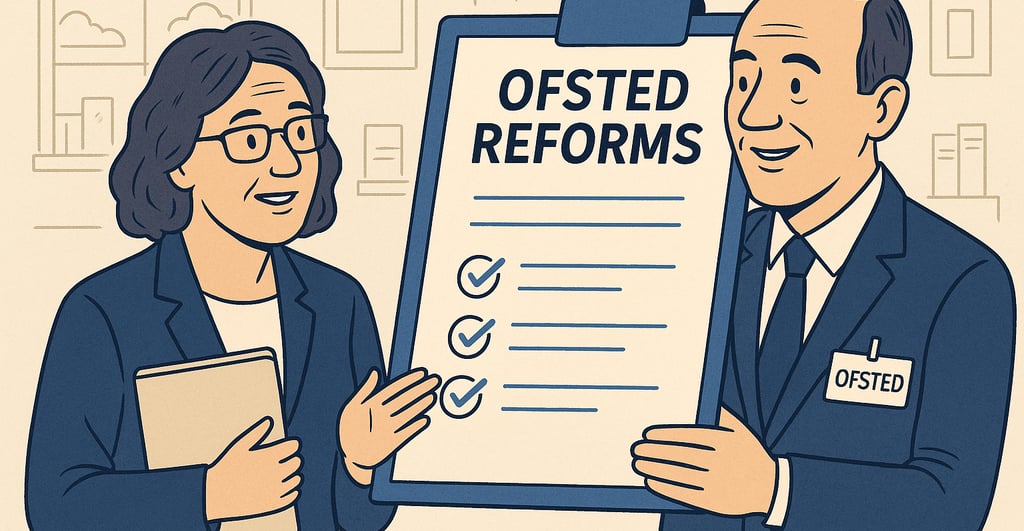
At Re.connect, we spend a lot of time talking with teachers and heads about stress, balance, wellbeing, and how to stay well in the midst of all the pressures of working in education. So, when Ofsted said it was reforming inspections, we hoped this might finally bring some relief. But, reading through the details and listening to people’s reactions, it’s hard not to feel that what we have been given are just surface adjustments and a deep sense of disappointment.
Getting rid of single word judgements sounded like a step forward. No more “Good” or “inadequate” labels pinned to a school’s front gate. But, when you look at what they are actually giving us, and you see that it’s been replaced with five new grades across up to eight separate areas, you realise it’s not really less pressure, it’s just pressure spread out differently.
Teacher Tapp asked nearly 10,000 what they thought, and the results were clear: only 11% felt positive about the plans. The rest either didn’t think it would make any difference, or feared it could make things worse. People keep calling it, “a missed opportunity”, and I get why. The changes seem merely cosmetic — a reshuffling of a few things without tackling the culture of fear and judgement at its core.
Headteachers are feeling it too. Nearly 2,000 members of the NAHT recently came together in a huge online meeting, and almost 90% said they were considering taking industrial action over the reforms. That’s huge. And their reasons? The same ones I keep hearing — that Ofsted still hasn’t learned from the tragedy of one headteacher’s death, that the culture of fear hasn’t changed, that educators are still being pushed to breaking point.
Even Ofsted’s own wellbeing review said that the new report cards could make stress levels worse. That alone should be a red flag. But, instead, the rollout caries on regardless.
From where we are standing now, this feels like a system that has lost touch with the people it is supposed to serve — educators and children. Inspections should be about growth and learning — about helping schools to improve in a way that supports the staff and the children. Unfortunately, right now, it just feels like a system built on anxiety.
What Can We Do — Protecting Staff Wellbeing
Until meaningful change arrives, schools can take small steps to safeguard wellbeing.
Social Wellbeing. One such step is to build peer-support circles. Headteachers and senior leaders can come together to share inspection experiences confidentially and debrief together afterwards. Connection reduces isolation, supporting social wellbeing.
Cognitive Wellbeing. Reframe inspections as shared reflection. Treat preparation as professional learning, not personal threat. Focus discussions on collective growth, not individual blame.
Emotional Wellbeing. Communicate boundaries clearly. Senior leaders (and teachers) should set limits on late-night email chains, and unnecessary paperwork.
Physical Wellbeing. After inspection or intensive preparation, block protected time for staff to rest, decompress, and reflect.
If Ofsted truly wishes to rebuild trust, it needs to re.connect with the people who make schools what they are — the teachers, leaders and support staff who show up every day for their pupils. Until then, the best we can do is to take care of each other, and hold on to why we went into teaching.
If any of this resonated with you, we’re building a Facebook community for educators who care about their wellbeing and want advice that actually makes sense. Come and join us at https://www.facebook.com/Re.connectTeachers/